DPO Consulting Joins Grant Thornton



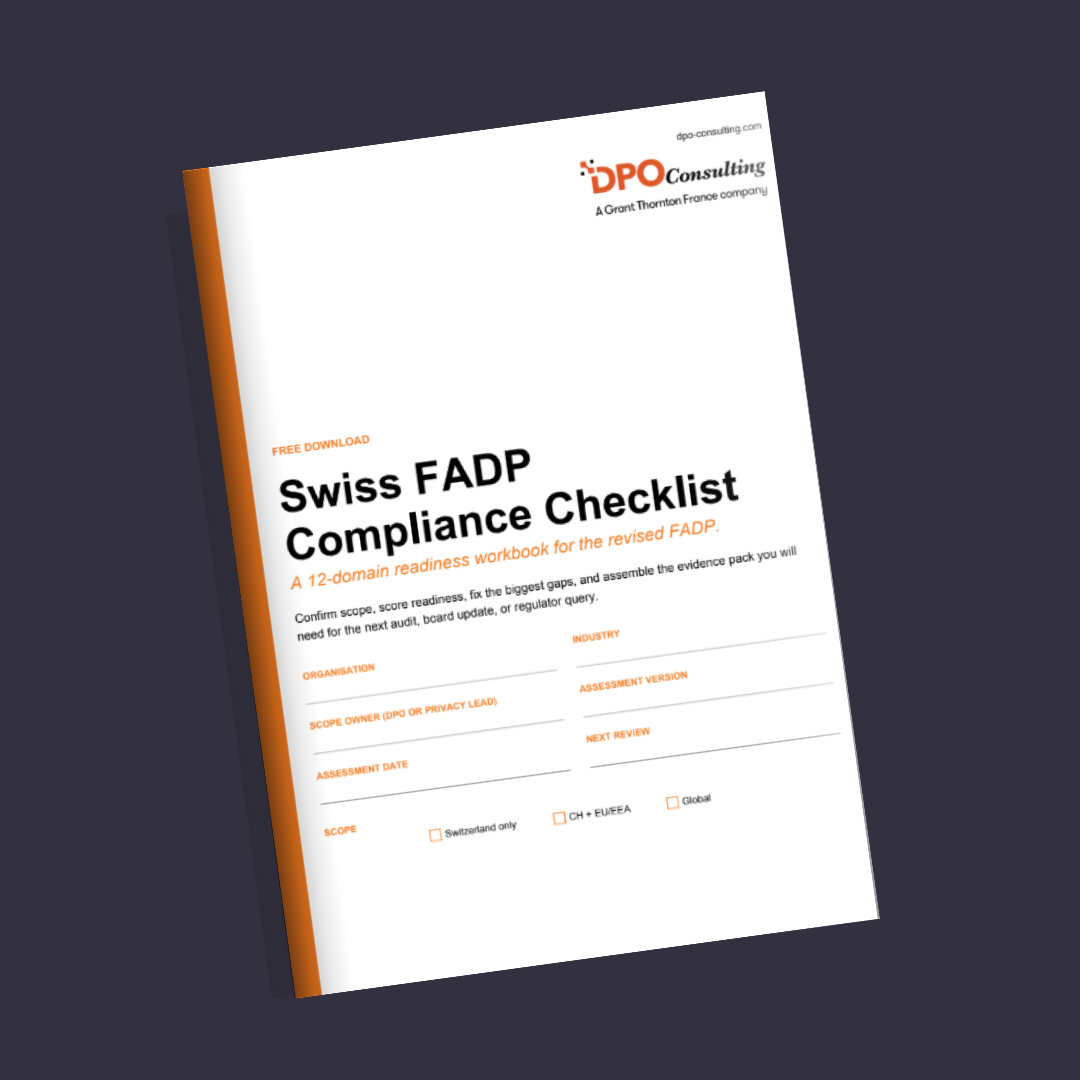
Swiss FADP Compliance Checklist (Downloadable PDF)
A practical FADP checklist for in-house teams, DPOs, and compliance leads working through the revised Federal Act on Data Protection. This FADP checklist template covers 12 control domains, 50+ requirements, and the evidence you need to defend your programme in front of an auditor, client, or the FDPIC.
TRUSTED BY


What Is the Swiss FADP Compliance Checklist?
The Swiss FADP checklist is a structured worksheet that helps your organisation assess, document, and improve compliance with Switzerland’s revised Federal Act on Data Protection (revFADP / nFADP, in force since 1 September 2023). It is built around the controls that auditors, clients, and the FDPIC actually look at: governance, transparency, vendor oversight, cross-border transfers, security, data subject rights, and incident readiness.
Use this FADP checklist template as the backbone of an internal gap assessment, a board-level readiness report, or a quarterly compliance review. Each item has a clear owner, status, due date, and evidence reference, so a half-finished assessment never lives only in someone’s head.
It is written for two audiences. In-house DPOs and privacy leads use it to structure their FADP programme without rebuilding a framework from scratch. Operational teams (IT, HR, marketing, procurement) use it to see what they own, what good looks like, and what evidence they need to produce.
What’s Included in the PDF?
The FADP checklist template is structured for real use, not just for a download count. Every section moves your programme one step closer to a state you can defend.
How to Use the PDF?
The FADP checklist works in three passes. Most teams complete the first two passes in a half-day workshop and the third over the following two to four weeks.
STEP 1 - Scope and assign
Fill in the cover page with your organisation, business unit, and checklist owner. Walk through section 1 (Scope, Roles & Applicability) first, since the rest of the checklist depends on knowing which processing activities are in scope and who acts as controller or processor.
STEP 2 - Status and priority
For each requirement, mark the current status and assign a priority. Be honest about "in progress" items: anything without documented evidence is, in practice, not yet implemented. The readiness scorecard will surface your top five priority gaps automatically.
STEP 3 - Evidence and action plan
Attach or link an evidence reference to each implemented item, and transfer the high-priority gaps into the action plan section with an owner and a due date. Review the plan on a quarterly cadence and roll completed items back into the implemented column.
Oops! Something went wrong while submitting the form.


Stay up to date on all the latest data privacy and GDPR compliance news.
Your email address will be used to send you our newsletter as well as information concerning the activity and news of DPO Consulting. You can unsubscribe at any time by clicking on the unsubscribe link in the emails. To find out more about your rights, see our Privacy Policy.
Oops! Something went wrong while submitting the form.


